

Andhra Pradesh HC Grants Divorce, Holds Non-Compliance with Restitution Decree Not a ‘Wrong’
 Copy Link
 Share
Share Save
Save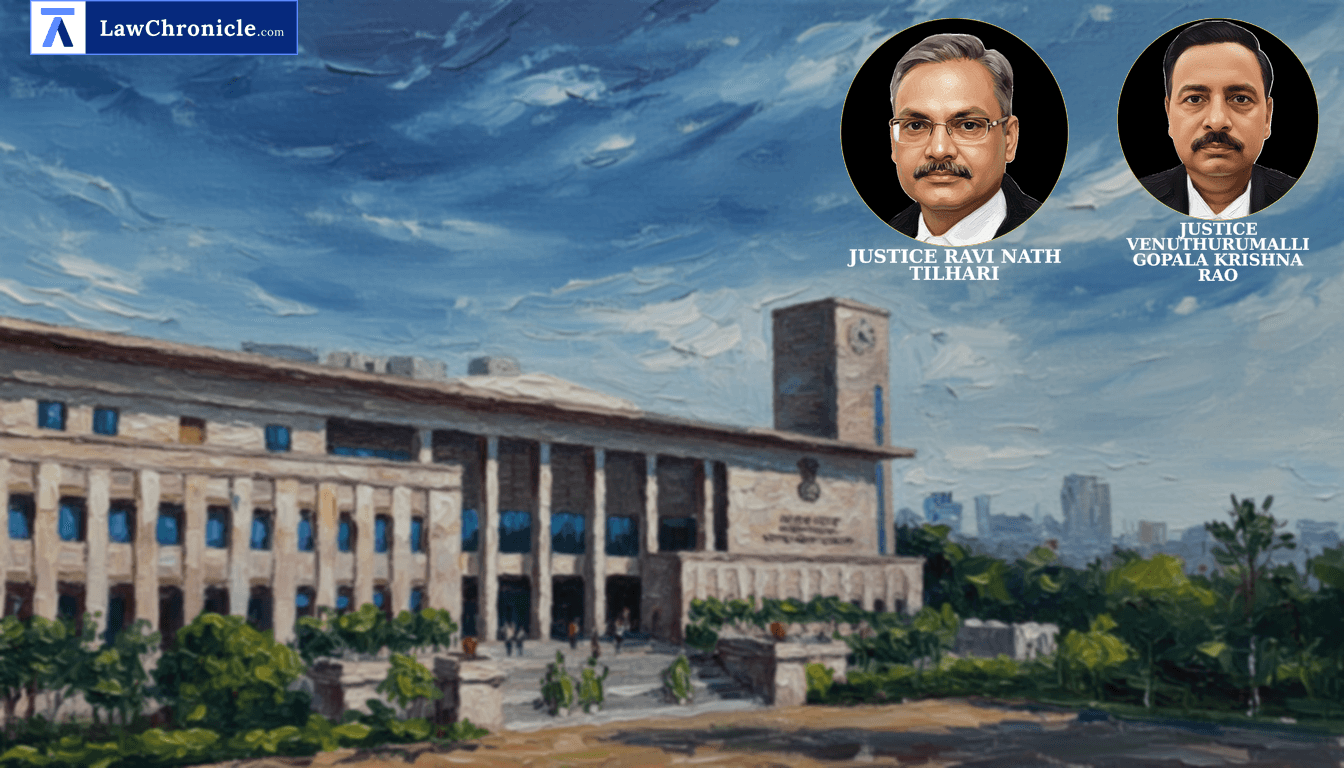
The Andhra Pradesh High Court held that under Section 13(1A) of the Hindu Marriage Act, the judgment debtor is obligated to comply with a decree for restitution of conjugal rights, failing which the decree holder is entitled to seek its execution.
A bench of Justice Ravi Nath Tilhari and Justice Maheswara Rao Kuncheam heard an appeal by the husband against the Family Court's dismissal of his petition for divorce under Section 13 (1A) (ii) of the Hindu Marriage Act, 1955, challenging the Family Court's finding that the husband was himself responsible for non-compliance with the decree for restitution of conjugal rights.
Decision Summary: The High Court allowed the appeal, held that the statutory period of one year after the decree for restitution of conjugal rights had elapsed and that the husband had made out the ground for divorce under Section 13 (1A) (ii) of the Hindu Marriage Act, 1955. The Court emphasised the interplay between Section 13 (1A) (ii) and Section 23 of the Hindu Marriage Act, 1955 and relied on precedents to determine what constituted a petitioner taking advantage of his or her "own wrong." The Court, in its reasoning, observed: "Even if we do not consider the evidence of PW 1, the husband, for the reason as given by the learned trial Court that he is the applicant himself and there is no corroboration of his evidence, still we are of the view that any 'wrong' within the meaning of Section 23 (1)(a) of the Hindu Marriage Act on the part of the husband could not be established or proved against him on preponderance of probabilities based on evidence on record neither as a fact nor in law."
Background
The appeal arose from HMOP No.64 of 2002, where the husband sought dissolution of the marriage solemnized on 05.02.1992 on the ground that there was no restitution of conjugal rights for one year after the contested decree dated 12.07.2001. The Family Court had dismissed the petition on the view that the husband was taking advantage of his own wrong by not allowing the wife to rejoin the matrimonial home; the wife had earlier succeeded in a proceeding for restitution of conjugal rights and in a maintenance claim. The respondent-wife deposed, inter alia, "………..He never expressed his willingness to take me back. He has no right to maintain the above O.P in pursuance of the decree obtained by me." The High Court examined the evidence of the parties and of independent witnesses and found serious contradictions and infirmities in the testimony relied upon by the respondent.
In determining whether a petitioner was disentitled by reason of "own wrong," the Court applied the legal standard in Section 23 of the Hindu Marriage Act, 1955 and considered authorities. It noted that Dr. N. G. Dastane v. Mrs. S. Dastane and Dharmendra Kumar v. Usha Kumar ( "AIR 1977 SC 2218": 1977 CaseBase(SC) 393) were relied upon to explain that the rider in Section 23 required conduct amounting to more than mere disinclination to resume cohabitation, and that antecedent conduct prior to a restitution decree was generally irrelevant as held by Pavuluri Murahari Rao v. Povuluri Vasantha Manohari ( "AIR 1984 Andhra Pradesh 54": 1983 CaseBase(AP) 20). The Court observed that Smt.Saroj Rani v. Sudarshan Kumar Chadha ( "AIR 1984 SC 1562": 1984 CaseBase(SC) 207) considered consent decrees and whether such conduct could constitute "own wrong," and that Sunita Rajendra Nikalie v. Rajendra Ednath Nikalie treated "wrong" as serious or grave misconduct rather than any lapse. The Court also recorded that Nayan Bhowrnick v. Aparna Chakraborty was inapposite because it addressed dissolution on the basis of irretrievable breakdown under extraordinary constitutional powers rather than the present statutory framework. The High Court further noted that the decree-holder could have invoked execution remedies under Order 21 Rule 31 of the Code of Civil Procedure, 1908 to enforce restitution, a fact not pursued by the respondent.
Applying the law to the facts, the High Court found that the respondent had not discharged the burden to prove that the husband committed a "wrong" within the meaning of Section 23 (1)(a) and that the trial court erred in dismissing the petition. The High Court set aside the Family Court's judgment and decree dated 06.08.2004 and dissolved the marriage dated 05.02.1992. No order as to costs was made and pending applications stood closed.
Case Details:
Case No.: CIVIL MISCELLANEOUS APPEAL No. 4279 of 2004
NeutralCitation: 2026:APHC:17934
Case Title: T. Ravi v. T. Lakshmi Devi
Appearances: (List advocates if available, for both sides using the format)
For the Petitioner(s): Sri K. A. Narasimham
For the Respondent(s): Sri Anup Koushik Karavadi
Source: 2026 CaseBase(AP) 159
 Breaking News