

SC: No New Hate Speech Laws by Courts; Existing Legal Framework Sufficient
 Copy Link
 Share
Share Save
Save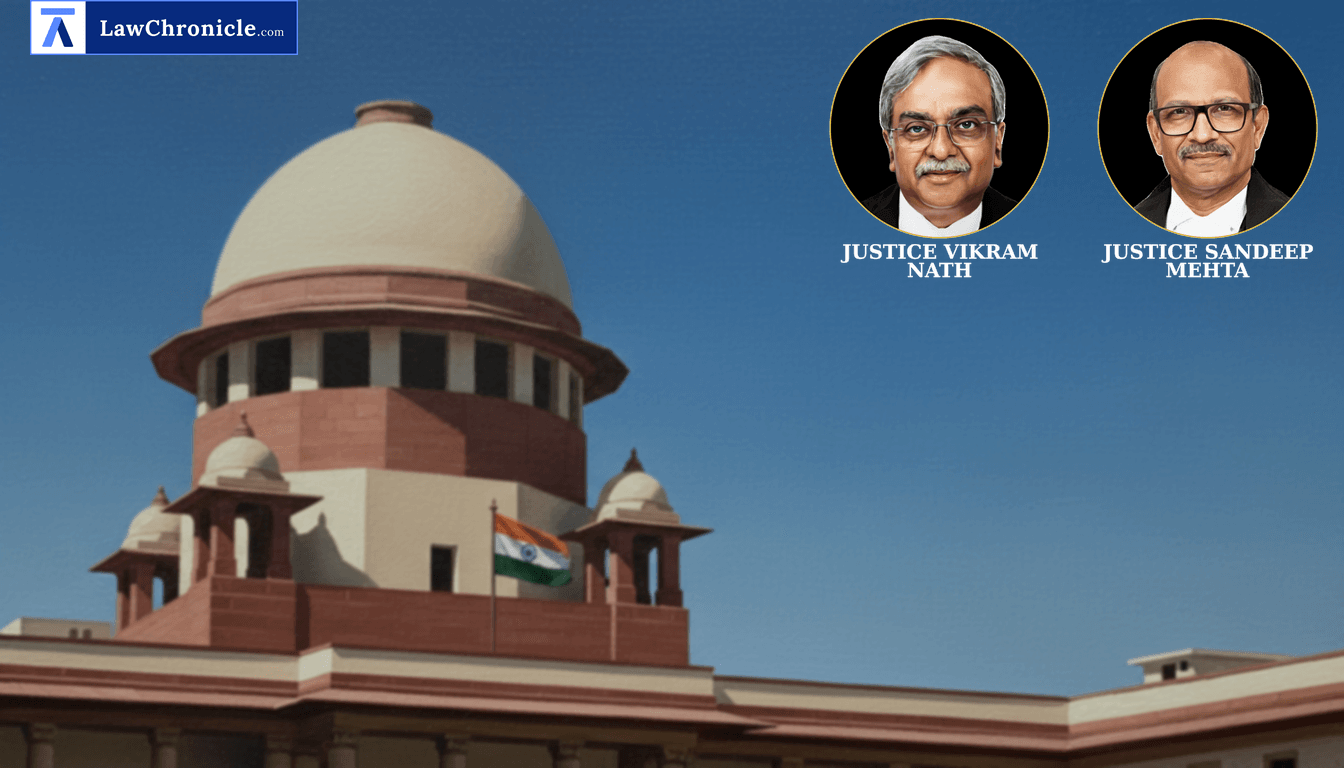
The Supreme Court of India dismissed writ petitions seeking directions to the Union of India to review and strengthen the legal framework governing “hate speech” and “rumour-mongering” through fresh legislation. The Court reiterated that the authority to define criminal offences and prescribe punishments lies exclusively with the legislature. In line with the Doctrine of Separation of Powers, it held that the judiciary cannot create new offences or expand the scope of criminal liability through judicial directions. Rejecting the argument that hate speech remains unregulated, the Court observed that existing provisions under the Indian Penal Code and allied laws adequately address acts that promote enmity, outrage religious sentiments, or disturb public tranquillity.
A bench of Justice Vikram Nath and Justice Sandeep Mehta heard a cluster of writ petitions and special leave petitions that challenged the adequacy of law to address ‘hate speech’, sought directions for legislative action, complained of non-registration of First Information Reports and prayed for a continuing mandamus to supervise investigations.
Decision Summary: The Court held that it could not legislate by creating new criminal offences or prescribing punishments and emphasised the need for legislative action where gaps existed, while directing faithful enforcement of existing procedural remedies.
The Court, in its reasoning, observed: "On the first issue, we hold that this Court, in exercise of its constitutional jurisdiction, cannot create or expand criminal offences or prescribe punishments in the absence of legislative sanction. Any such exercise would transgress the settled doctrine of separation of powers and encroach upon the legislative domain." The Court summarised that the field of substantive criminal law was not unoccupied and that remedies under the criminal procedure code framework were available to address non-registration of FIRs; it declined to issue a continuing mandamus but flagged the need for better enforcement and legislative consideration.
Background:
The batch arose from multiple public interest writ petitions and complaints prompted by speeches and social media content, including episodes during the COVID-19 period, and relied upon the Law Commission’s 267th Report. The petitioners had urged wider legal reform and tighter preventive measures; respondents argued that statutory remedies and enforcement, rather than judicial legislation, were the appropriate response. The bench analysed foundational principles by citing authorities on the nature of crime and separation of powers, relying upon P. Rathinam v. Union of India ( "(1994) 3 SCC 394": 1994 CaseBase(SC) 309) to summarise characteristics of crime and upon Rai Sahib Ram Jawaya Kapur v. The State of Punjab and Kesavananda Bharati v. State of Kerala to explain the constitutional division of powers. The Court examined limits on judicial law‑making by reference to Asif Hameed v. State of J&K ( "1989 Supp (2) SCC 364": 1989 CaseBase(SC) 465), SCWLA v. Union of India ( "(2016) 3 SCC 680": 2016 CaseBase(SC) 712) and Dr. Ashwini Kumar v. Union of India ( "(2020) 13 SCC 585": 2019 CaseBase(SC) 1505), and reiterated that courts could indicate the need for reform but could not compel legislation as underscored in Union of India v. K. Pushpavanam ( "(2023) 20 SCC 736": 2023 CaseBase(SC) 604) and Pravasi Bhalai Sangathan v. Union of India ( "AIR 2014 SC 1591": 2014 CaseBase(SC) 197). On procedural safeguards and mandatory FIR registration the Court relied on Lalita Kumari v. Government of Uttar Pradesh & Ors. ( "(2014) 2 SCC 1": 2013 CaseBase(SC) 771) and quoted the principle that registration of an FIR was mandatory where information disclosed a cognizable offence. The Court also applied the teachings of Madhu Bala v. Suresh Kumar ( "(1997) 8 SCC 476": 1997 CaseBase(SC) 1381), Sakiri Vasu v. State of U.P. ( "(2008) 2 SCC 409": 2007 CaseBase(SC) 968) and Mohd. Yousuf v. Afaq Jahan ( "(2006) 1 SCC 627": 2006 CaseBase(SC) 795) in delineating the role of the Magistrate and the scope of Section 156(3) powers, and examined precedents in State of Karnataka v. Pastor P. Raju ( "(2006) 6 SCC 728": 2006 CaseBase(SC) 244), R.R. Chari v. State of U.P. and Supt. And Remembrancer of Legal Affairs v. Abani Kumar Banerjee to clarify that sanction requirements operate at the stage of taking cognizance and not at the pre‑cognizance investigation stage. The bench noted earlier supervisory decisions in Union of India v. S.B. Vohra ( "(2004) 2 SCC 150": 2004 CaseBase(SC) 16) and procedural innovations discussed in Lok Prahari v. Union of India, while observing practical limits of national monitoring stated in Tirupati Balaji Developers (P) Ltd. v. State of Bihar and the constitutional value of fraternity discussed in National Federation of Indian Women v. Union of India, K.S. Puttaswamy v. Union of India ( "(2017) 10 SCC 1": 2015 CaseBase(SC) 636) and Citizenship Act, 1955, Section 6-A, In Re, and the contemporaneous observations in Kaushal Kishor v. State of U.P. ( "(2023) 4 SCC 1": 2023 CaseBase(SC) 326).
The judgment recorded that the Law Commission had surveyed a range of statutes and regulatory measures and recommended specific penal provisions; accordingly the Court noted how provisions and procedure under the Constitution and existing statutes were engaged. The judgment explained that the Preamble and fundamental values of the Constitution of India, 1950 informed the constitutional concerns, that electoral regulations under the Representation Of People Act, 1951 were relevant to speech during elections, and that statutory prohibitions such as those under the Protection Of Civil Rights Act, 1955 and the Religious Institutions (Prevention of Misuse) Act, 1988 were part of the legislative matrix examined by the Commission. The Court also recorded that broadcast and distribution controls in the Cable Television Networks (Regulation) Act, 1995, the certification regime under the Cinematograph Act, 1952, the procedural and investigative architecture now reflected in the Bharatiya Nagarik Suraksha Sanhita, 2023, the anti‑corruption framework under the Prevention Of Corruption Act, 1988, and the programme code embodied in the Cable Television Networks Rules, 1994 were among the instruments surveyed for addressing various dimensions of hate speech and dissemination.
The Court concluded that where cognizable offences were disclosed the police and magistracy must follow the multi‑tier statutory route for registration and investigation, that prior sanction operates at the stage of taking cognizance and not at the registration or investigative stage, and that extraordinary constitutional intervention by way of continuing mandamus was not warranted in the absence of a legislative vacuum or demonstrated systemic failure. The Court therefore dismissed the writ petitions in Part I, partly allowed an appeal to clarify the law on sanction and FIR registration, closed or directed responses in specified contempt matters, and urged legislatures and authorities to consider Law Commission recommendations and improve enforcement.
Case Details:
Case No.: Writ Petition (Civil) No. 943 of 2021
Case Title: Ashwini Kumar Upadhyay v. Union of India & Ors.
Appearances: (List advocates if available)
For the Petitioner(s): Shri Ashwini Kumar Upadhyay (petitioner‑in‑person); Shri Sanjay R. Hegde (Amicus Curiae); Shri M.R. Shamshad (senior counsel); Shri Nizamuddin Pasha; Shri Sanjay Parikh (senior counsel for applicant‑PUCL)
For the Respondent(s): Shri Dama Seshadri Naidu (senior counsel for Election Commission of India); Ms Nisha Bhambhani (counsel for News Broadcasters and Digital Association)
Source: 2026 CaseBase(SC) 373
 Breaking News